
Classic Games Network
Shawn Mottley, Founder & CEO
Washington, D.C. Metro Area
Social Module
Classic Games Network is helping players all over the world take a quick game break
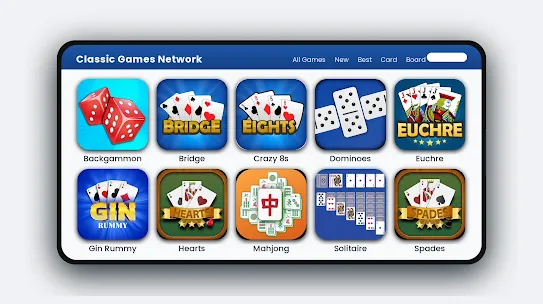
Shawn Mottley launched Classic Games Network in 2013 as a way to scratch an ever-present entrepreneurial itch (one he says that he inherited from his mother), while also building out an entire 20-year career at DirecTV. Today, his collection of classic games includes such familiar titles as Bridge, Dominoes, and Gin Rummy, each giving players around the world a way to relax, with ad revenue helping to keep the games free to all.
An entrepreneurial streak
Ask Shawn Mottley where he got his hustle from and he’ll tell you it’s in his blood. Or, more to the point, he gets it from mom.
She was a seamstress, the kind of person who built a career with her own two hands, literally. And, at 85 years young, you can still find her sewing, fixing, helping people to this very day.
Even Shawn has to laugh when he thinks about all the times he’s tried (and failed) to convince her to retire. “I’m like, ‘Mom, you’re retired,’” Shawn insists. “And she fires back, ‘I just do it. That’s what I love doing.’”
But after one conversation with Shawn, and it’s pretty clear, the apple doesn’t fall far from the tree.
In fact, as a kid, Shawn would sell Christmas cards door to door, even mow lawns. After high school, he joined the military, where he spent nine years traveling the world, yet still somehow managed to hold down a few side jobs while he was at it.
Then came DIRECTV, where Shawn would end up spending more than 20 years. But still, that entrepreneurial spirit of his (and his mom’s) would persist.
That’s because, at his core, Shawn’s a creator. He doesn't feel right unless he’s out there making things. More than that, he likes making things better.
But as he rose up through the ranks at DIRECTV, the work started becoming more about managing people rather than actually creating something.
Then, around 2013 or so, mobile phones and their new app stores started to really take off, creating a rare window of opportunity for developers everywhere, no matter their size.
As Shawn likes to say, “it was the wild wild west,” where any mobile game you’d put out seemed to be able to find players easily, and fast.
There was just one hitch: Shawn didn’t know how to code. But Shawn, being his mother’s son, wasn’t about to let a little technicality like that get in his way.
Not to mention, games just felt right. “Games are fun,” he adds. “As far as utilities go, I had no idea which utility app to even make.”
But Shawn’s first crack at app development wasn’t exactly smooth sailing either. Shawn built an early word game and suffice it to say: it bombed.
Instead of quitting though, he simply shrugged it off and treated it like part of his own leveling up.
If his hustle came from his mother, his refusal to quit came from his father. It’s a mantra Shawn carries to this day: you don’t walk away when something gets hard, you keep going until you figure it out.
So he kept at it: learning from other app entrepreneurs, hiring developers from the other side of the world, eventually building a whole business around classic game titles. Bridge. Dominoes. Gin Rummy. All familiar names, each made for some easy play and quiet breaks.
“My players just want to sit back and relax,” he says. “It’s their meditation.”
And thus began the Classic Games Network.
Free to play, built to last
Shawn knew from the get go that his games would be free.
At first, it was because Shawn was admittedly still trying to figure out the whole subscriptions and in-app purchases model, leaving him with only one viable option: ads.
Easier to implement at the time for him, ads turned out to be an effective way for Classic Games Network to start earning some income.
“It was the easiest thing to put in,” Shawn says. “It funded our adventure and fun.”
But over time, another, more compelling reason would emerge: Shawn wanted people to be able to play his games for free. Some players may not want to pay for a casual card or dominoes game, for instance, while other folks may not be able to afford to pay right at that moment.
Either way, he didn’t want to lock anyone out of the Classic Games Network because they couldn’t afford it. But with ads, he could have his cake and eat it too. Players can get access to the network without running into a paywall, and Shawn can make money at the same time.
Fast forward to today, and ads still make up the majority of the company’s revenue.
And that income has gone a long way, helping Shawn work with his overseas development partners, maintain the apps, respond to issues, and, of course, make the games better.
But while Shawn is managing the business on the one hand, he’s also dealing with a very international audience on the other. It’s actually one of the key reasons he’s stuck with AdMob all these years.
Classic Games Network’s players span the entire globe, and Shawn sees downloads from all over, places like France, Japan, Africa, South America even.
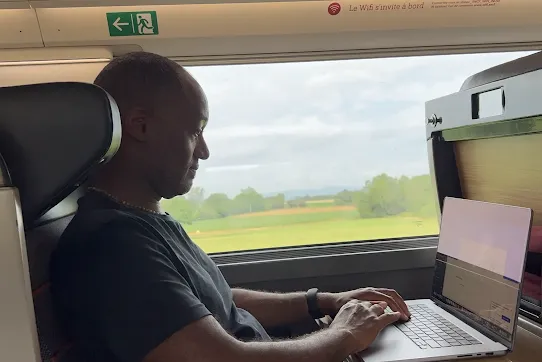
“AdMob allowed me to get revenue from all those places,” he elaborates. “It allows me to get revenue from anywhere in the world.”
These days, AI has become part of Shawn’s method, too.
Take one of his favorite uses for Gemini: Shawn exports ad data from AdMob, brings the CSV file into Gemini, and prompts it to act like a growth manager. From there, Gemini can help him spot issues in the data, such as a dead mediation layer perhaps (meaning an ad network setup that is no longer serving ads properly), or a weak fill rate (too many ad slots are going unfilled).
“Gemini is really key for that,” he says. “It’ll point me where I’m doing good, where I’m doing bad.”

“AdMob allows me to get revenue from anywhere in the world.”
Keep the game going
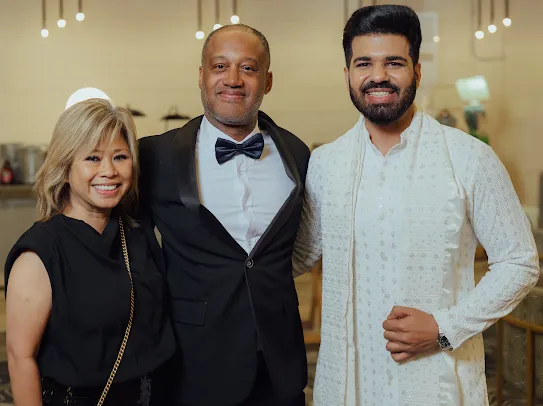
To keep everything running smoothly, Shawn works with Hashbyte Studio, a development team based out of India. They’ve been partners for years now, in spite of the time difference. Just last year, the partnership even moved up a notch, when Shawn went to India to attend a team member’s wedding.
“It was a full-on Indian wedding,” he remembers fondly. “With all the colors and traditions and family. It was one of the most interesting things to be a part of.”
For most of this whole journey, he’d only ever known the team over Google Meet or Slack. Seeing them in person, celebrating one of life’s most important milestones like that with them, sharing a week of food and family; it brought their partnership closer, even familial.
That kind of far reaching global connection also carries over to the players themselves. With such a worldwide base of users, it only makes sense that Classic Games Network gets feedback from all over.
One player from South Africa, for instance, always comes to mind for him, someone who would write to him regularly about Bridge rules.
Shawn remembers the back and forth because she never held back. Sometimes she caught real issues; other times it came down to nuance. Either way, he took each point seriously, and in stride — precisely the sort of player-developer connection that tends to make games better.
And the proof speaks for itself: at one point, the business grew enough such that the revenue started to match Shawn’s own corporate salary; it’s one of his proudest personal milestones.
But Shawn is also the first to admit that entrepreneurship can be totally stressful at times. If something breaks, it’s all on him. There’s no other department to blame, no one else to help resolve the matter.
Still, he loves the work and he soldiers on.
As for the future of Classic Games Network, Shawn’s plan is less about launching a dozen more titles, and more about improving the games he’s already got.
That means his player community can expect tournament play, multiplayer, Android expansion — anything, really, that’s going to help Shawn stick to his original philosophy — find work you love, and keep your hands in it.
It’s what mom would do.

About the Publisher

SHARE THIS STORY
Social Module